
Hybrid Solar System: Smart Energy with Reliable Backup
A hybrid solar system combines solar panels, a battery and the electricity grid. It helps you use more solar power and keeps selected essentials running during a power cut.
Energy without compromise
What is a hybrid solar system?
A hybrid solar system connects solar panels, a battery and the utility grid through a hybrid inverter. It manages where your electricity comes from and where extra solar power goes.
During the day, solar power runs your home or business first. Extra energy can charge the battery. If local rules allow it, extra power may also go to the grid. When solar output is low, the battery can support selected circuits. If the battery is low, the system can use grid power. During a power cut, the backup output can keep essential loads running within the system limits.
- Use solar power during the day
- Store extra energy in the battery
- Use the grid when more power is needed
- Keep selected essentials running during an outage
Intelligent energy management
How does a hybrid solar system work?
Inside the system
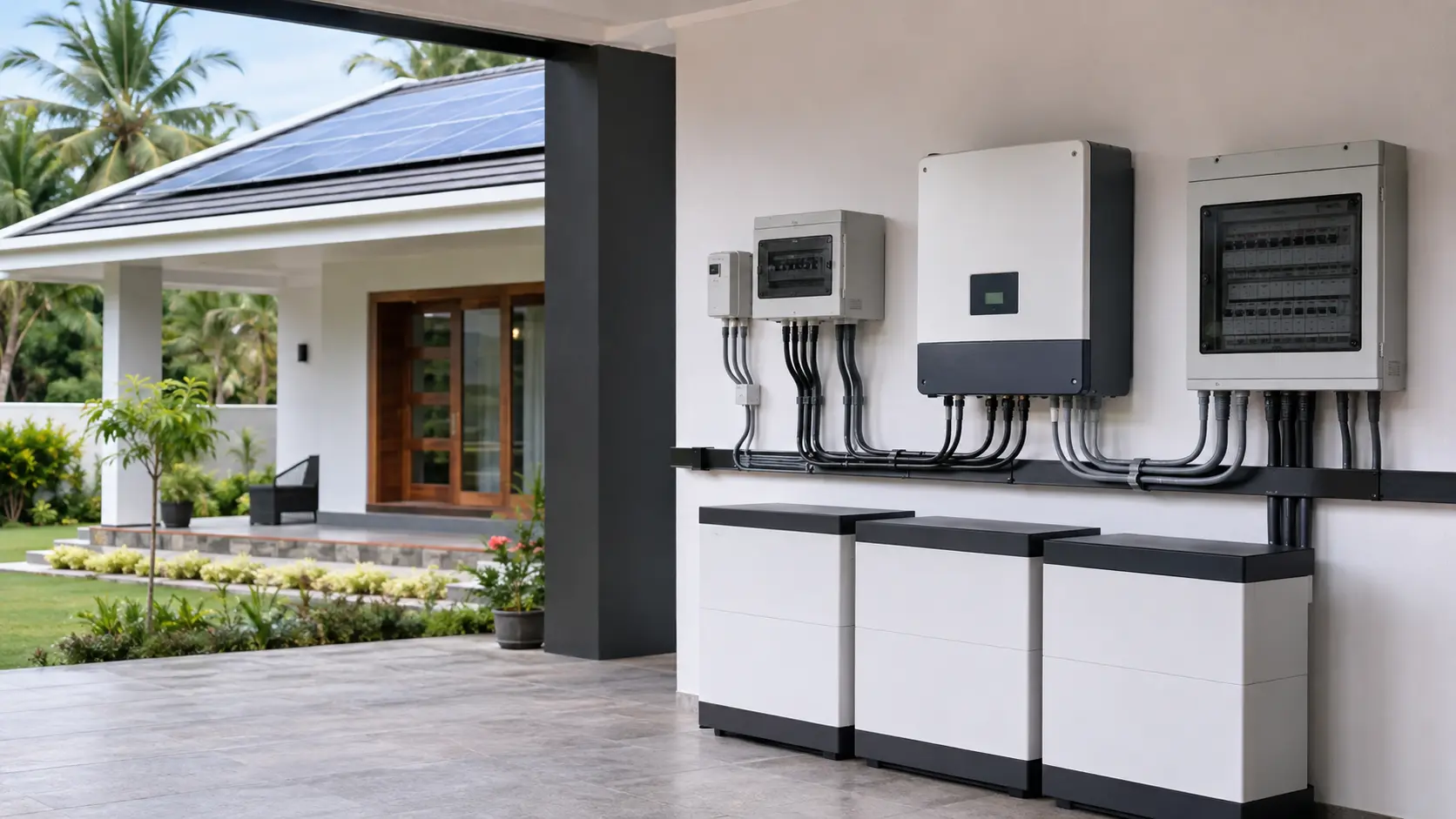
Essential hybrid solar components
- Solar panels sized for your energy use and available roof space
- Hybrid inverter that works with the battery and local grid rules
- Battery with a suitable battery management system
- Backup circuits that separate essential loads from non-essential loads
- Safety equipment such as isolators, surge protection and earthing
- Monitoring app to track solar output, power use, battery level and grid flow
Compare your options
On-grid vs off-grid vs hybrid solar
| Feature | On-grid | Off-grid | Hybrid |
|---|---|---|---|
| Grid connection | Required | Not required | Normally connected |
| Battery storage | Usually not included | Required | Included |
| Backup during outage | No, in a standard system | Yes, within design limits | Yes, for assigned backup loads |
| Surplus export | Possible where approved | No grid export | Possible where the configuration and rules allow |
| Typical priority | Lowest-cost bill savings | Independence in remote locations | Bill savings plus backup resilience |
Actual features depend on the inverter, utility approval and local rules.
Why property owners choose hybrid
Benefits of a hybrid solar system
Backup power
Keep selected essentials running, such as lights, fans, Wi-Fi, refrigerators or key business systems.
Higher solar self-use
Store extra solar power and use it after sunset or when solar output is low.
Smart energy control
Track solar production, battery level, power use and grid flow from an app or monitoring screen.
Reduced grid exposure
Use solar and battery power to reduce how much electricity you buy from the grid.
Expandable design
Some systems can add more solar panels or battery storage later if expansion is planned from the start.
Business continuity
Commercial systems can keep important equipment running during short power cuts or unstable grid supply.
- Batteries increase the upfront cost.
- They need a safe installation space.
- They usually need replacement sooner than solar panels.
- Backup time changes with the connected load, battery size, charge level, weather and battery condition.
Design for real demand
How to size a hybrid solar system
A hybrid system must be sized for both solar generation and backup needs. You need enough panel capacity for daily energy use. You also need enough battery capacity for the backup time you want. The inverter must handle the highest backup load that may run at one time.
1. Choose essential loads
List the equipment that must run during a power cut. Note the wattage of each item. Also identify motors and compressors because they may need extra power when they start.
2. Decide backup duration
Decide how many hours each essential load should run. More backup time needs a larger usable battery capacity.
3. Review daily energy use
Review up to 12 months of electricity bills. Also consider future appliances, business equipment or EV charging.
4. Assess the site
Check roof space, shade, panel direction and structural condition. Also choose safe locations for the inverter and battery with enough ventilation.

Homes, offices and industry
Where hybrid solar makes sense
- Homes experiencing frequent or disruptive power cuts
- Properties with important security or communication equipment
- Offices that need continuity for routers, computers and access systems
- Retail, hospitality and institutions protecting selected operational loads
- Sites wanting solar savings today with storage designed into the system
For large buildings, a professional energy audit can identify the most important circuits. This helps avoid buying more battery capacity than you need.
Professional execution
Hybrid solar installation process
Energy and backup-load assessment
Review electricity bills, power-cut patterns, essential loads and the backup time you need.
Site survey and engineering
Check the roof, shade, electrical system, equipment locations, ventilation, cable routes, safety needs and grid rules.
System and battery selection
Choose panels, an inverter and a battery that work well together. Check usable battery capacity, charging limits and system compatibility.
Installation and circuit separation
Install the solar panels, inverter, battery and safety equipment. Then connect the selected essential circuits to the backup output.
Programming and commissioning
Set solar, battery and grid priorities. Set the battery reserve and backup rules. Then complete the required electrical safety tests.
Monitoring and handover
Explain how to use the system, share warranty details and provide shutdown instructions. The installer should also set up monitoring access.
Understand lifecycle value
What affects hybrid solar system cost?
Solar capacity
Panel capacity, inverter size, mounting structure, cables and safety equipment affect the solar system cost.
Battery specification
Battery size, usable kWh, battery type, power rating, warranty and control system are major cost factors.
Installation complexity
Roof type, rewiring, backup circuits, equipment location, approvals and site conditions affect labour and engineering costs.
A low quote may include a battery that is too small or may leave out required electrical work. Compare usable battery capacity, not only the advertised rating. Ask for written warranties and a clear list of what is included and excluded. Start with B&B’s solar installation cost and quotation guide.
Quality and safety checklist
Questions to ask your hybrid solar installer
- Which loads will receive backup?
- What is the inverter’s continuous and surge output?
- How many usable kWh does the battery provide?
- What backup duration is estimated at the stated load?
- Are the inverter and battery officially compatible?
- What protections, earthing and isolators are included?
- What are the product and workmanship warranties?
- Who handles monitoring, service and warranty claims?
Learn more about selecting a professional solar installer in Kerala and how a complete solar installation works.
Plan reliable solar backup
Get a hybrid solar system designed for your property
Share your recent electricity bills, essential-load list and preferred backup time with B&B Green Energy. The team can assess your site and recommend a suitable hybrid solar system.
Frequently asked questions
Hybrid solar system FAQs
What is the main difference between hybrid and on-grid solar?
On-grid solar mainly reduces electricity bills and usually stops during a power cut. A hybrid system adds battery storage and can power selected loads when the grid fails.
Can a hybrid solar system run an entire house?
Yes, but whole-home backup needs a larger inverter, battery and solar system. Many homes get better value by backing up only essential circuits.
Does hybrid solar work during a power cut?
Yes. A correctly designed hybrid system can disconnect from the grid and power selected backup loads using solar and battery energy. The amount of power and backup time depend on the system size.
Can a hybrid solar system work without a battery?
Some hybrid inverters can work with the grid before a battery is added. However, useful backup during a power cut normally needs a compatible battery.
How long will the battery provide backup?
Backup time depends on battery size, connected load, charge level, inverter losses, battery age and available solar power. Ask for a written backup estimate based on your actual loads.
Can surplus hybrid solar energy be exported to the grid?
Export may be possible if the inverter, meter and local utility rules allow it. Review B&B’s KSEB net-metering guide and confirm the latest requirements.
What maintenance does a hybrid system need?
Keep the panels clean and schedule electrical checks. Also monitor battery health, temperature, software updates, alarms and charge levels as recommended by the manufacturer.