
Choosing the right system
Hybrid vs On-Grid Solar: Why the Choice Matters
Solar panels can reduce the amount of power you buy from the grid. But each solar system works differently during excess generation and power cuts. In Kerala, most homes and businesses choose between an on-grid solar system and a hybrid solar system.
An on-grid system is mainly used to reduce electricity bills. It can also work with approved net metering. A hybrid system adds battery storage, so it is better when backup power is important.
The best system is the one that fits your needs. Consider your power use, number of outages, backup needs, roof space, budget, and future plans.

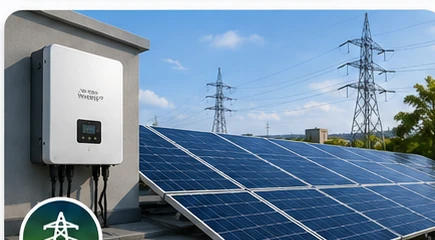
Grid-connected solar
What Is an On-Grid Solar System?
An on-grid solar system is connected to the utility grid. Solar panels produce electricity during the day. The inverter changes it into power your home or business can use. If solar power is not enough, the system takes the balance from the grid.
If the system makes more power than you use, the extra power may go to the grid through approved net metering. A standard on-grid system has no battery. This usually makes it cheaper and easier to maintain than a hybrid system.
Key Features of On-Grid Solar
- Connected to the utility grid
- Designed to reduce electricity bills
- Compatible with applicable net-metering procedures
- No battery bank required
- Lower initial investment
- Remote generation monitoring
Solar with energy storage
What Is a Hybrid Solar System?
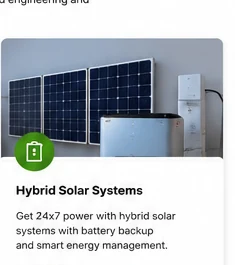
A hybrid solar system combines solar panels, a hybrid inverter, the grid, and a battery. During the day, solar power can run the building and charge the battery. The system may also work with the grid, depending on its setup and approval.
During a power cut, selected essential appliances can keep running. They use battery power and available solar energy. Backup time depends on battery size, battery condition, sunlight, and the number of connected appliances.
Key Features of Hybrid Solar
- Solar, grid and battery integration
- Backup power during electricity failures
- Critical-load management
- Smart charging and energy management
- Higher initial investment
- Battery replacement planning
Side-by-side comparison
Hybrid vs On-Grid Solar System Comparison
The table below highlights the practical differences that usually matter most to homeowners, institutions and businesses in Kerala.
| Comparison Point | On-Grid Solar | Hybrid Solar |
|---|---|---|
| Primary purpose | Reduce electricity bills | Reduce bills and provide backup |
| Grid connection | Required for normal operation | Usually grid-connected with battery backup |
| Battery storage | Not normally included | Included |
| During outage | Standard system shuts down | Selected loads can continue |
| Initial cost | Lower | Higher |
| Maintenance | Lower | Higher due to batteries |
| Best suited for | Stable grid and savings focus | Backup and energy continuity |
Investment and returns
Hybrid vs On-Grid Solar: Cost and Payback
On-grid solar usually costs less at the start because it does not need a battery. It is often a good choice when your main goal is to lower monthly electricity bills. A correctly sized system may also give a faster payback.
Hybrid solar costs more because it includes a battery and backup equipment. The extra value is not only from bill savings. You also get backup power during outages.
Ask for a clear, itemised quote. Check the panels, inverter, battery size, mounting structure, safety devices, warranties, installation work, monitoring, and maintenance.
What Affects Solar Payback?
- Daily and annual electricity consumption
- Daytime usage pattern
- Electricity tariff
- Usable roof area
- System efficiency
- Battery size and replacement cycle
- Net-metering eligibility
- System uptime and maintenance
Kerala decision guide
Which Solar System Is Better for Kerala?
The right choice depends on grid reliability, daytime power use, and how important backup power is to you.
Choose On-Grid Solar When
- Your main goal is lower electricity bills
- Grid supply is reliable
- You have strong daytime usage
- You prefer a lower initial cost
- You do not need battery backup
- You want simpler maintenance
Choose Hybrid Solar When
- Your area has frequent outages
- Critical appliances need backup
- You want battery-supported power
- You accept a higher initial cost
- You want more energy control
- You can plan for battery maintenance
Property-specific recommendations
Best Solar Options for Homes and Businesses
Homes with Stable Grid
On-grid solar is often practical when the priority is reducing household electricity bills.
Homes Needing Backup
Hybrid solar can support selected critical loads such as lights, fans, internet and refrigeration.
Commercial Buildings
Properties with high daytime electricity use may benefit strongly from properly sized on-grid solar.
Industrial Facilities
Industrial sites need a detailed load study, safety plan, and roof or structure check before choosing a system.

Installation quality matters
Professional Solar Design Matters
Whether you choose hybrid or on-grid solar, the system should match your actual site and power needs.
A good solar design should include:
- Electricity-bill analysis
- Roof and shadow survey
- System capacity calculation
- Panel and inverter specification
- Battery sizing
- Protection and earthing design
- Monitoring and commissioning
- Written warranties
Buying guidance
Common Mistakes to Avoid
Choosing Only by Lowest Price
Very low quotes may leave out safety equipment, strong mounting, monitoring, or after-sales service.
Oversizing the Battery
Choose battery size based on essential appliances and the backup time you really need.
Ignoring Daytime Usage
Solar savings are better when more electricity is used during the day.
Assuming All Inverters Are Equal
Check the exact inverter model, warranty, monitoring features, and battery compatibility.
Expecting Unlimited Backup
Hybrid backup is not unlimited. It depends on battery size, connected load, and available solar power.
Skipping After-Sales Checks
Ask who will handle faults, warranty claims, service, and regular maintenance.
Get the right solar recommendation
Still Unsure Between Hybrid and On-Grid Solar?
B&B Green Energy can review your electricity bills, roof, backup needs, and location. The team can then recommend a suitable solar system.
Frequently asked questions
Hybrid vs On-Grid Solar FAQs
Which is better: hybrid or on-grid solar?
On-grid solar is usually better when the main goal is bill savings and the grid is reliable. Hybrid solar is better when backup power is important.
Does an on-grid solar system work during a power cut?
A standard on-grid system normally shuts down during a grid failure for safety.
Can a hybrid solar system use KSEB net metering?
Eligibility depends on the approved configuration and current utility procedures.
Is hybrid solar more expensive?
Yes. Hybrid systems usually cost more because they include batteries and a compatible hybrid inverter.
How long will a hybrid battery provide backup?
Backup time depends on usable battery size, connected load, battery condition, and available solar power.
Which system requires less maintenance?
On-grid solar generally requires less maintenance because it has no battery bank.
Which system gives faster payback?
On-grid solar often gives faster payback because of its lower initial cost.
Can batteries be added later?
It may be possible. This depends on the inverter and how the system was designed.
Continue your solar research